How to Prove Event ROI to Your CMO: Content Yield as the Metric That Lands
Attendance numbers don't defend a seven-figure event budget on their own. CMOs want to know what the event produced for the rest of the marketing plan. Content yield answers that: how much publishable content an event generated, how fast it shipped, and what that content earned after the doors closed. You can only report it if your video arrives while it still matters.
Why attendance isn't enough to prove event marketing ROI
Events are carrying more weight in marketing plans. Bizzabo's 2026 benchmark reports that 78% of organizers call in-person conferences, summits and conventions their most impactful marketing channel, and 40% plan to run more events in 2026.
More budget means more scrutiny. A CMO comparing events with paid media or content programs will ask the same question of each: what did we get, beyond the people in the room?
Search traffic is shifting the stakes
EMARKETER, citing Chartbeat data, reports that Google search traffic to publishers fell 33% globally in 2025, and says marketers are investing in live events as a channel AI summaries cannot disrupt. If search sends less traffic, the clips, quotes and speaker posts from your events become a larger share of how you reach people who weren't there.
What content yield means
Content yield is the amount of usable marketing content an event produces, measured alongside how quickly it shipped and how it performed. It turns "we ran a great event" into a number your CMO can compare with other programs.
The three parts of content yield
- Volume: how many session videos, clips, quotes and transcripts the event produced.
- Velocity: how long it took each one to go live after the session ended.
- Value: what the content earned: views, shares, leads, sponsor renewals and paid on-demand access.
Why velocity is the multiplier
Content that ships late earns less. Scott Graffius's analysis puts the average LinkedIn post's half-life at about 23 hours. A clip published during the event joins a live conversation; the same clip published a week later has to start one.
That is why content yield and turnaround are the same conversation. You can't report a strong yield if the clips ship three weeks late.
A content yield scorecard for your next report
| Metric | What to count | Where it comes from |
|---|---|---|
| Sessions published | Full session videos live, as a share of sessions run | Video library or platform |
| Clips per session | Short clips published per talk, by format | Social scheduler, Eventcut Gallery |
| Time to publish | Minutes or hours from session end to video live | Session end time vs publish time |
| Speaker shares | Speakers who posted their own clip | Speaker outreach, social listening |
| Sponsor deliverables | Branded videos delivered to sponsors, and when | Sponsor report |
| Engagement | Views, shares and comments in the first 72 hours | Platform analytics |
| Pipeline | Leads or opportunities touched by event content | CRM campaign attribution |
| On-demand revenue | Paid access or gated views after the event | Member or content platform |
Report it per event and per room-day, so a four-room event and a single-stage summit can be compared fairly.
Where yield is usually lost
Most events produce plenty of raw footage; the yield is lost between the stage and the feed. Forrester's Q1 2025 survey of B2B event teams found only 21% were using AI to repurpose content after the event. Goldcast's 2025 survey found at least 43% of marketers were missing chances to repurpose video from webinars and virtual events; Goldcast sells video software, so treat that as vendor research.
The causes are familiar: footage on drives, one editor per room, every format re-edited by hand, and approvals by email.
How Eventcut raises content yield
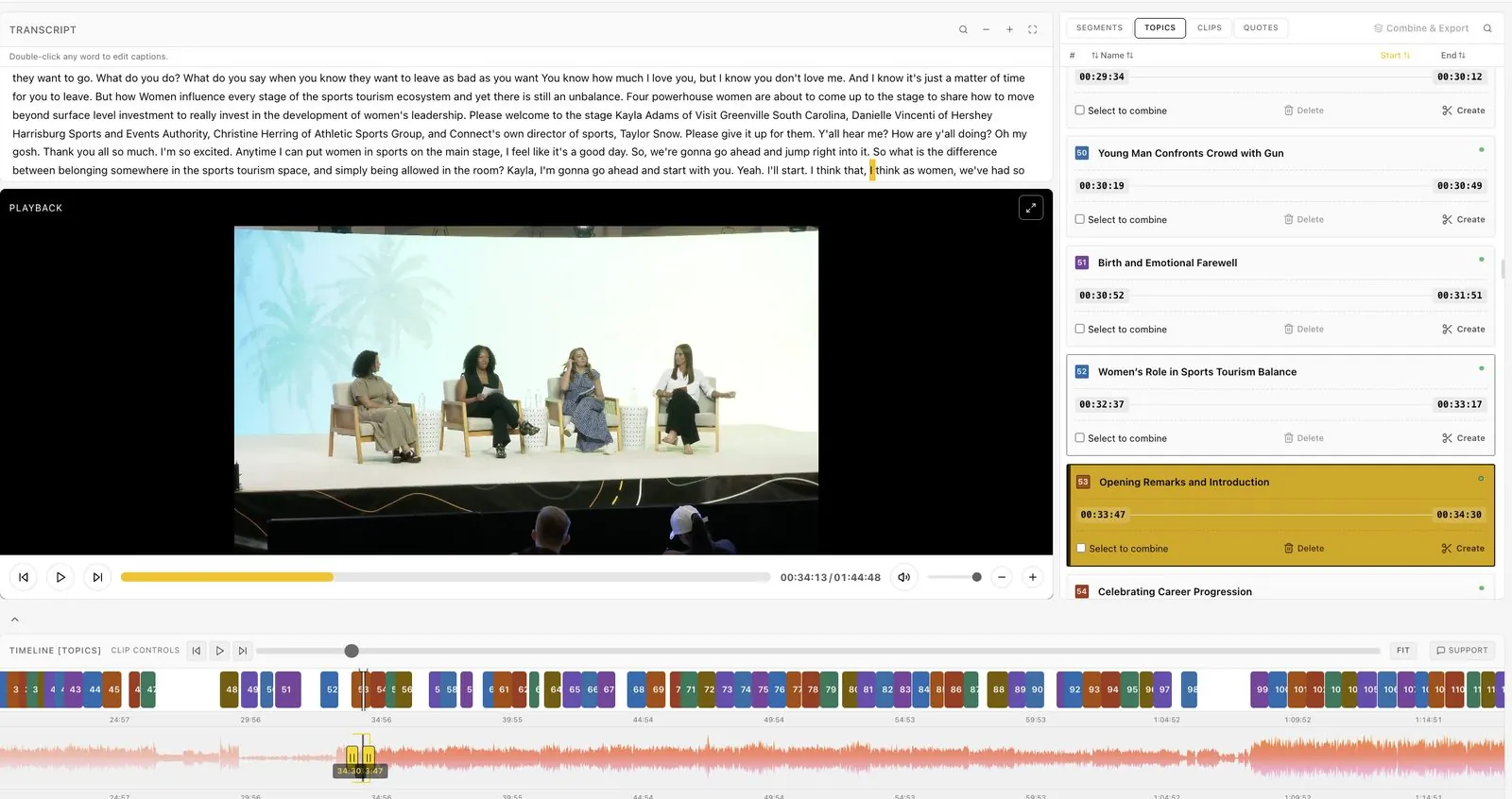
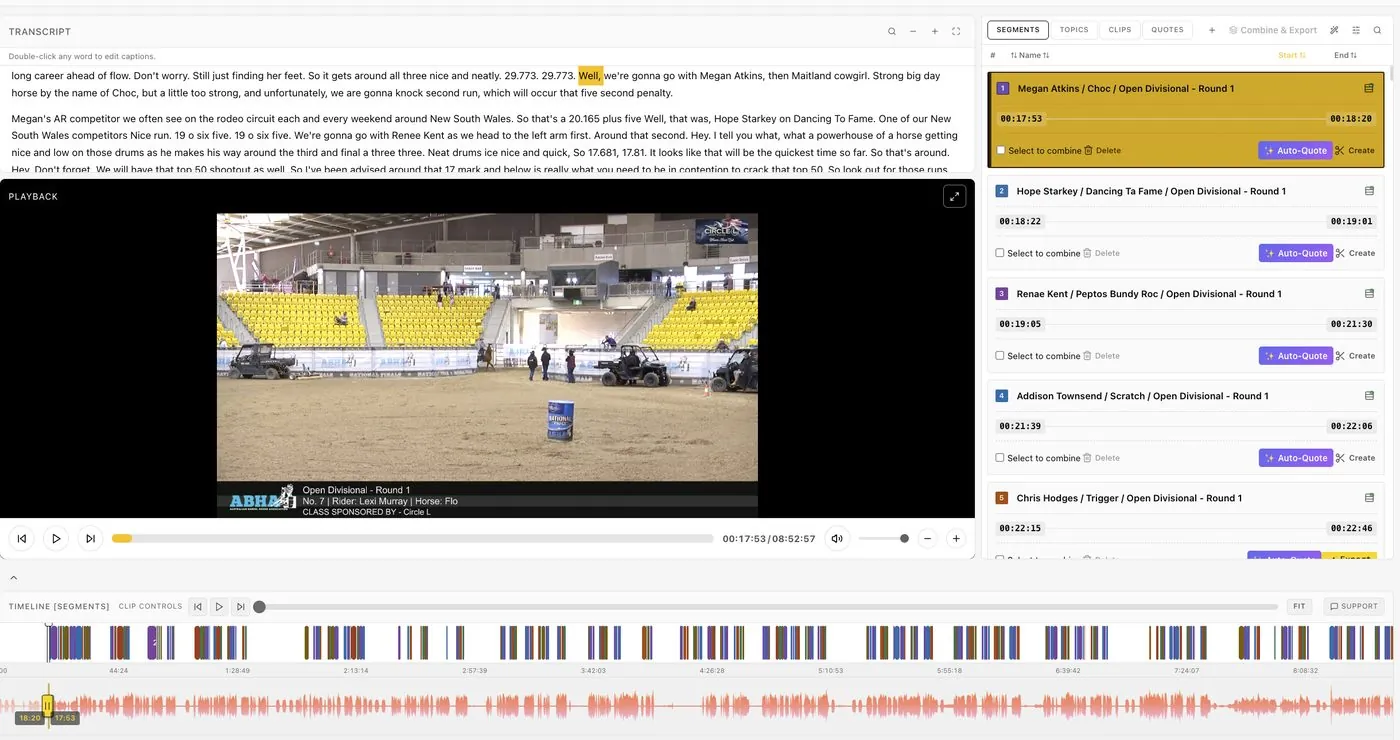
Eventcut edits from the live stream, so volume and velocity rise together.
- Every session, every room. Sessions are found, named from the runsheet and ready within minutes of each talk ending.
- More clips per session. Cut clips from the live transcript while the speaker is talking; Eventcut suggests more as each session ends.
- Quotes without rewatching. Quote Detection scans a full day and ranks the most quotable lines.
- All formats at once. Clips under six minutes are reframed to 9:16 and 1:1 automatically.
- Delivery built in. Videos go cloud-to-cloud to your platforms, speakers and sponsors.
Our measured figure is 10 minutes from session end to published clip, which is the number that moves "time to publish" on your scorecard.
How to present it to your CMO
Lead with one slide: what the event produced, how fast it shipped, and what it earned. Put last year's numbers beside this year's. If a sponsor renewed after receiving same-day video, say so.
For sponsor-side reporting, read event sponsor video deliverables. For multi-room programs, see Eventcut Enterprise, and for the workflow behind velocity, the guide to post-event video turnaround.